About High Potential
Assessments Ian MacRae developed have been completed more than a million times, across our own tests and partner distributors.
Founded in 2014
High Potential Psychology publishes free workplace assessments and provides psychometric development and expert advice. Led by Ian MacRae, work psychologist, we help people understand themselves at work and help organisations develop assessments tailored to their needs.
Assessments developed by Ian MacRae have been completed more than a million times, across our own tests and those of partner distributors.
We use sophisticated psychometrics combined with human expertise to gather high-quality data about people, teams, and workplaces. Psychometric assessments provide detailed insights into individual behaviours, strengths, and areas for development. We can use this data to uncover patterns and trends that offer a deep understanding of how teams function and how workplace dynamics influence performance. Using the right research and assessment processes we can investigate a wide range of questions about people at work.
Analysing, sharing, and discussing this data equips everyone in the organisation to understand the same key issues from the same perspective. This shared understanding creates a common language across all levels of the organisation. It helps align individual and team goals with organisational objectives. Ultimately, this approach drives better decision-making, stronger team dynamics, and overall workplace success.
High Potential Traits Indicator
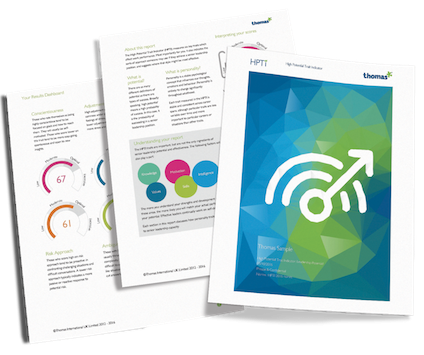
The HPTI was High Potential's first flagship assessment. Research and development began in 2011. The HPTI was made commercially available in 2014 through High Potential Psychology. In 2016, Thomas International became its exclusive worldwide distributor.
High Potential & White Label Psychometrics

We build our own workplace psychometrics, and have developed white label tests and assessments for a range of clients to measure personality, motivation, employee engagement, technical capability, cognitive abilities, problem-solving, consumer preferences and workplace culture.